Get a FREE, No-Obligation quote
We’ll get back to you promptly with specialist advice — and a great price.
* Required

Talk to the specialists

0800 468 928

We’ll get back to you promptly with specialist advice — and a great price.
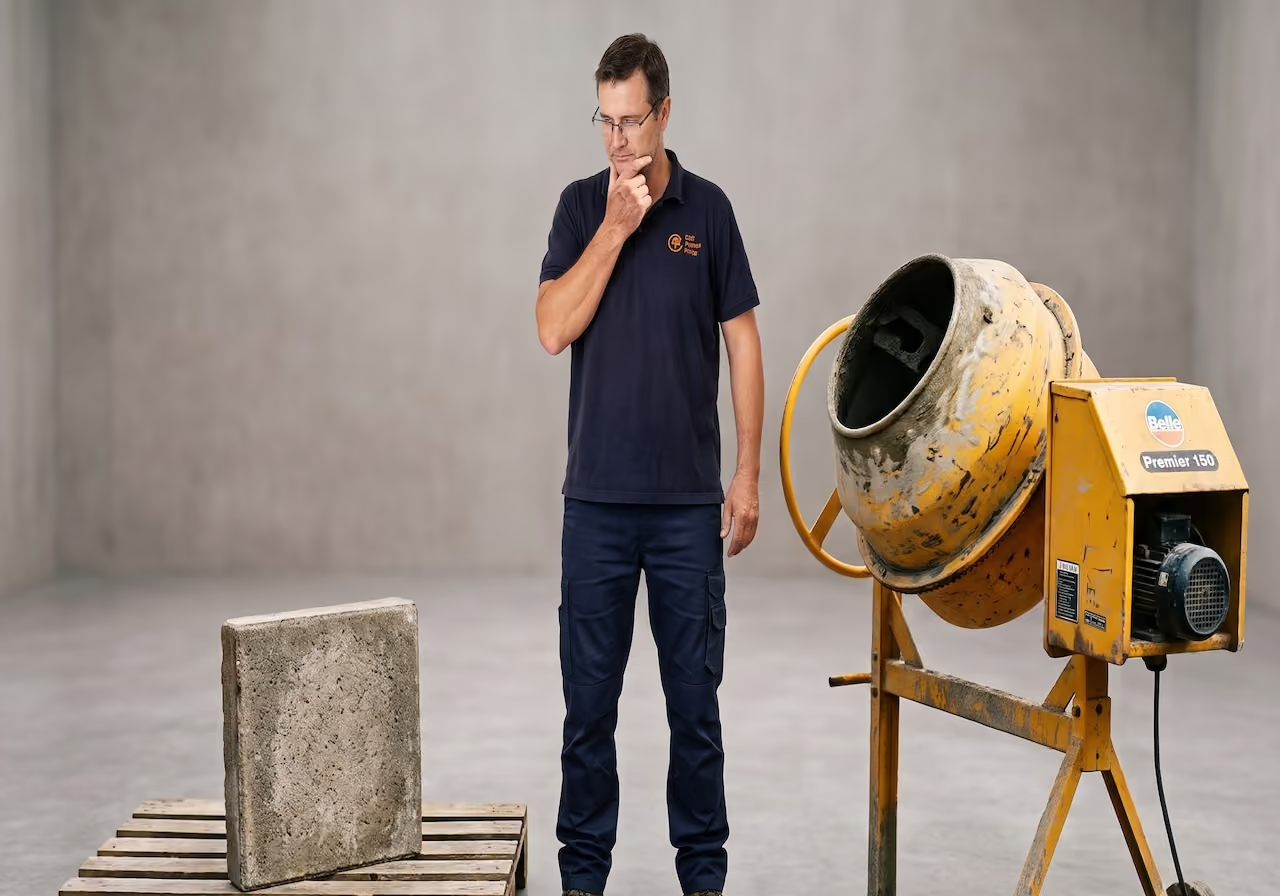
When you’re investing in a brand-new mains pressure cylinder or a high-efficiency heat pump, the last thing you want to do is throw away hundreds of dollars on unnecessary siteworks.
So, let's break down the rules and how to get your base sorted without blowing the budget.
Before we look at pavers vs. poured concrete, we have to look at the sheer physics of what we are dealing with.
A standard 180-litre hot water cylinder doesn’t just weigh 180kg. By the time you factor in the heavy tank, the insulated outer casing, the valves, and a full tank of water, you are looking at a total weight of around 230kg to 250kg. If you have a larger family and go for a 300-litre cylinder, you’re looking at close to 380kg pressing down on a footprint not much wider than a couple of rugby balls.
If that base shifts, sinks, or tilts even slightly, it puts massive stress on the copper pipework connecting the cylinder to your home. Over time, that stress causes expensive leaks.
Under the New Zealand Building Code (specifically G12/AS1), there isn't a strict law that says, "Thou shalt only use poured concrete." Instead, the code states that the cylinder must be installed on a stable, level surface capable of supporting the weight, and it must be properly restrained against earthquakes using seismic straps secured to the wall studs.
So, how do the two options stack up against the rules?
Can you use a paver? Yes, absolutely. In fact, our team at the Hot Water Shop uses high-quality concrete pavers for outdoor relocations very often.
However - and this is a big howeve - you can’t just chuck a paver down on top of loose grass or mud and call it a day. If you do, the ground will soften in the winter, the cylinder will tilt, and your plumbing will twist.
If you want to use a paver, the ground must be prepared properly:
The Verdict: If the ground next to your house is stable and properly leveled, a paver is a completely compliant, safe, and cost-effective solution.
Pouring a dedicated concrete pad (often boxed out with timber and filled with a quick-set concrete mix) is the gold standard.
You might need to spend the extra money on a poured pad if:
You do not need to spend extra money on a custom-poured concrete pad if you already have a flat, stable, well-draining clay or dirt pathway where the ground can easily be prepared to take a heavy-duty concrete paver. A properly laid paver will comfortably pass inspection and keep your cylinder stable for decades.
Thinking about moving your hot water system outside? Don't guess the siteworks. Give the team at the Hot Water Shop a call, and we’ll help you figure out the smartest, most cost-effective setup for your home.