Get a FREE, No-Obligation quote
We’ll get back to you promptly with specialist advice — and a great price.
Emergency or you’d rather a phone chat? Call 0800 468 928
* Required

Talk to the specialists

0800 468 928

We’ll get back to you promptly with specialist advice — and a great price.
Emergency or you’d rather a phone chat? Call 0800 468 928
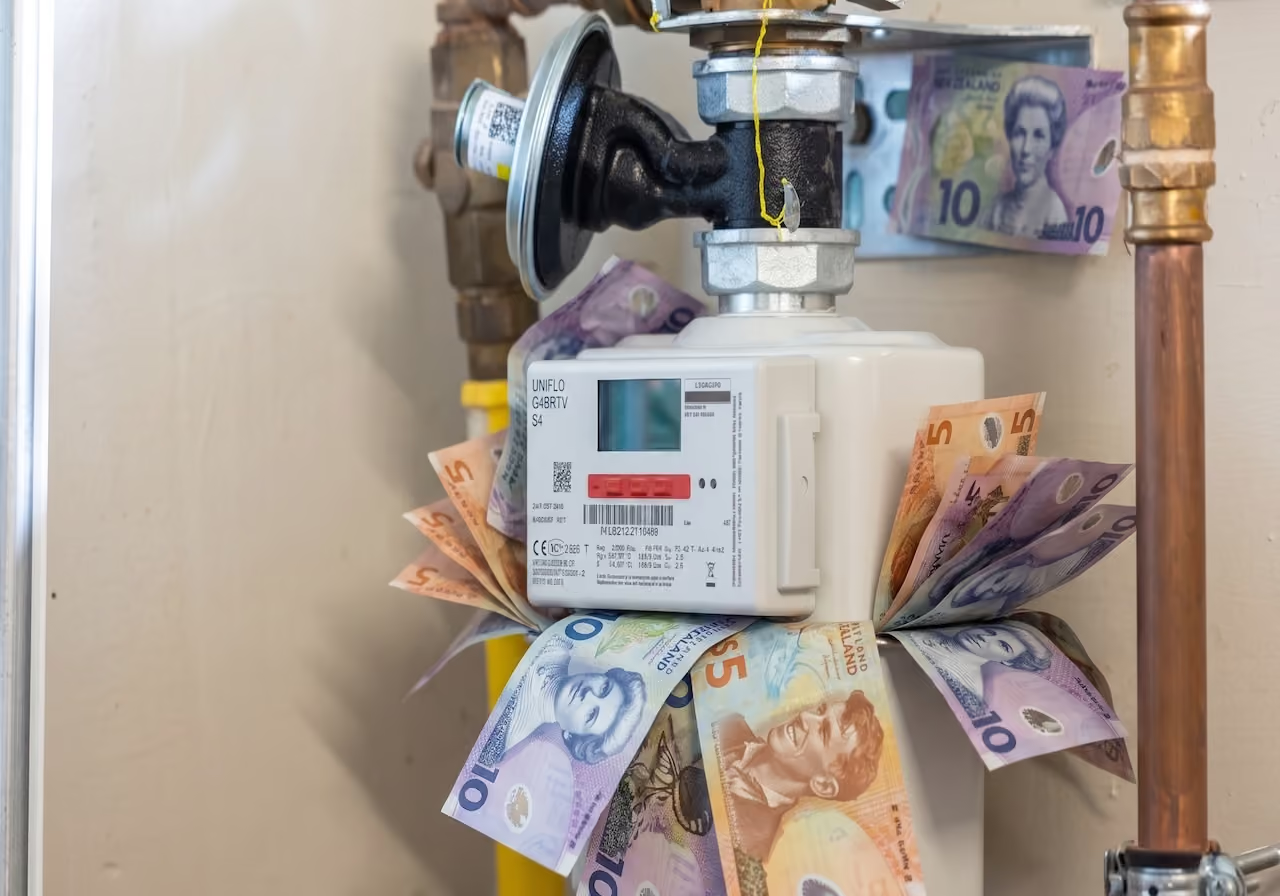
If your Christchurch home relies on reticulated LPG, your monthly energy bills have likely been climbing. If you have been putting off ditching your gas hot water califont or cooking hob, waiting will likely cost you more.
What is the Gas Decommissioning Cost Trap?
When homeowners decide to transition away from gas, they usually call their energy retailer to cancel the account and request a standard disconnection. Historically, this meant a quick technician callout to pull the meter out of the box for a flat fee of $150 to $200.
But that is changing....
Because domestic gas demand is dropping across New Zealand, network operators are strictly managing their ageing underground infrastructure. Leaving a "live" gas line sitting under your lawn up to an empty meter box represents a major long-term liability. As a result, networks are shifting from simple meter removals to full mains decommissioning.
The Cost Trap: Full decommissioning requires the network distributor to physically cut and permanently cap the service pipe out at the street boundary. This typically costs around $500 + gst but because this process can involve excavation, road traffic management, and civil contractor labour, these skyrocketing construction fees are being passed directly to the homeowner. What used to be a flat fee is now frequently billed as "POA" (Price on Application), scaling anywhere from a few hundred dollars to well over $1,000 if a public street or footpath needs digging up.
If you wait until these strict decommissioning rules are universally enforced or contractor labour rates climb even higher, the financial barrier to exiting the gas network will probably grow.
Even if you turn off your gas appliances today and vow never to burn another megajoule of LPG, simply leaving the gas meter attached to your house is bleeding money.
The Commerce Commission allows regular increases to gas pipeline charges to cover network maintenance. Because fewer households are using the network, these fixed overhead costs are being divided among a shrinking pool of remaining customers.
Every year you procrastinate is a year spent paying the equivalent of a brand-new home appliance just to keep a locked metal box attached to your exterior wall.
When you disconnect from the reticulated network, your immediate priority is replacing your water heating—an expense that typically accounts for around 30% of an average Kiwi household's total energy bill.
Modern electric water heating systems are highly reliable, well-insulated, and offer excellent ways to cut down your monthly energy spend compared to expensive reticulated LPG. Depending on your budget, household size, and layout, there are three primary electric options to consider:
This is the most common direct replacement for a gas system. It uses an insulated internal storage tank with a standard electric resistive element to heat the water.
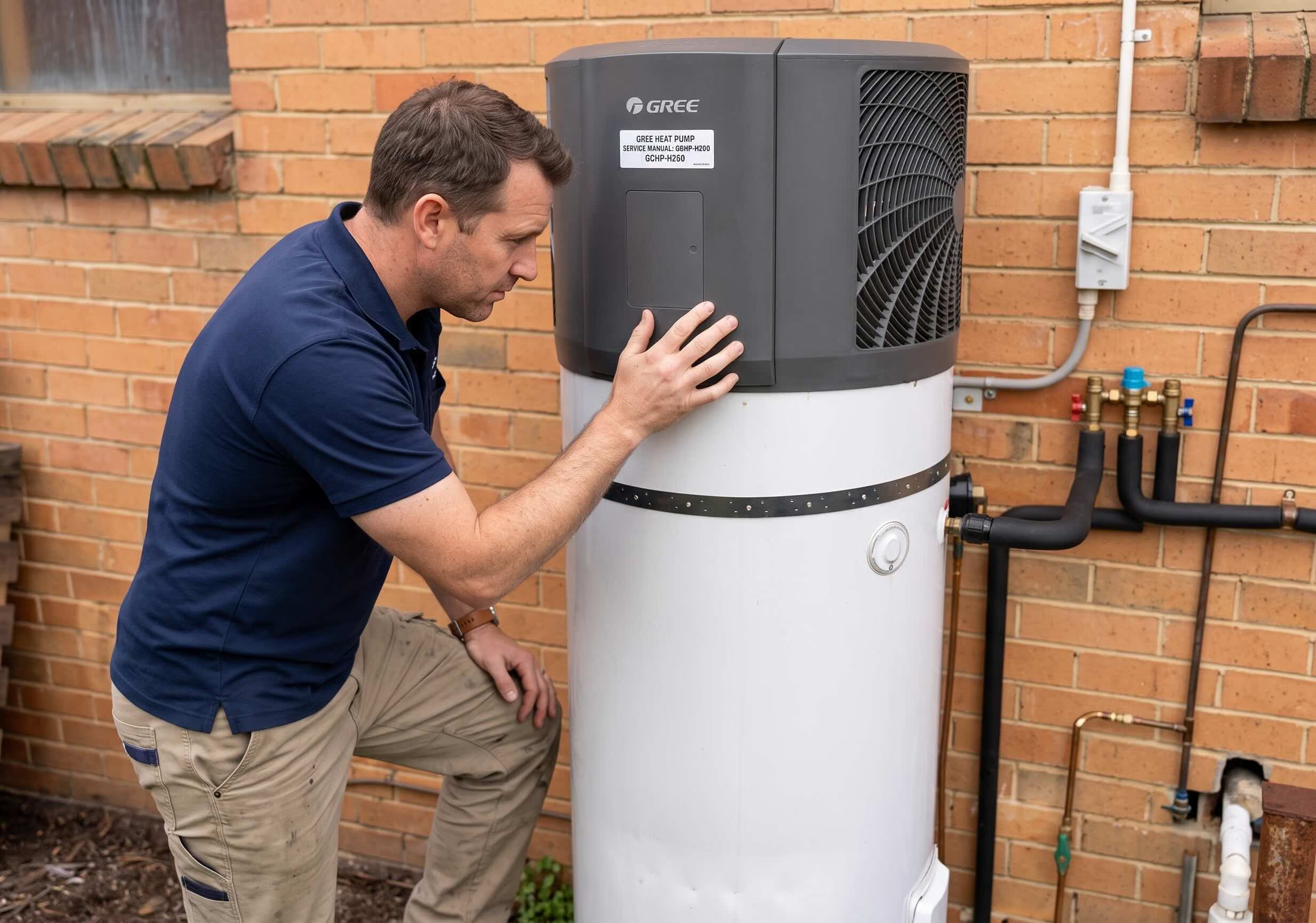
Operating like a refrigerator in reverse, a heat pump water heater extracts free, ambient heat from the outside air and transfers it directly into a water storage tank.
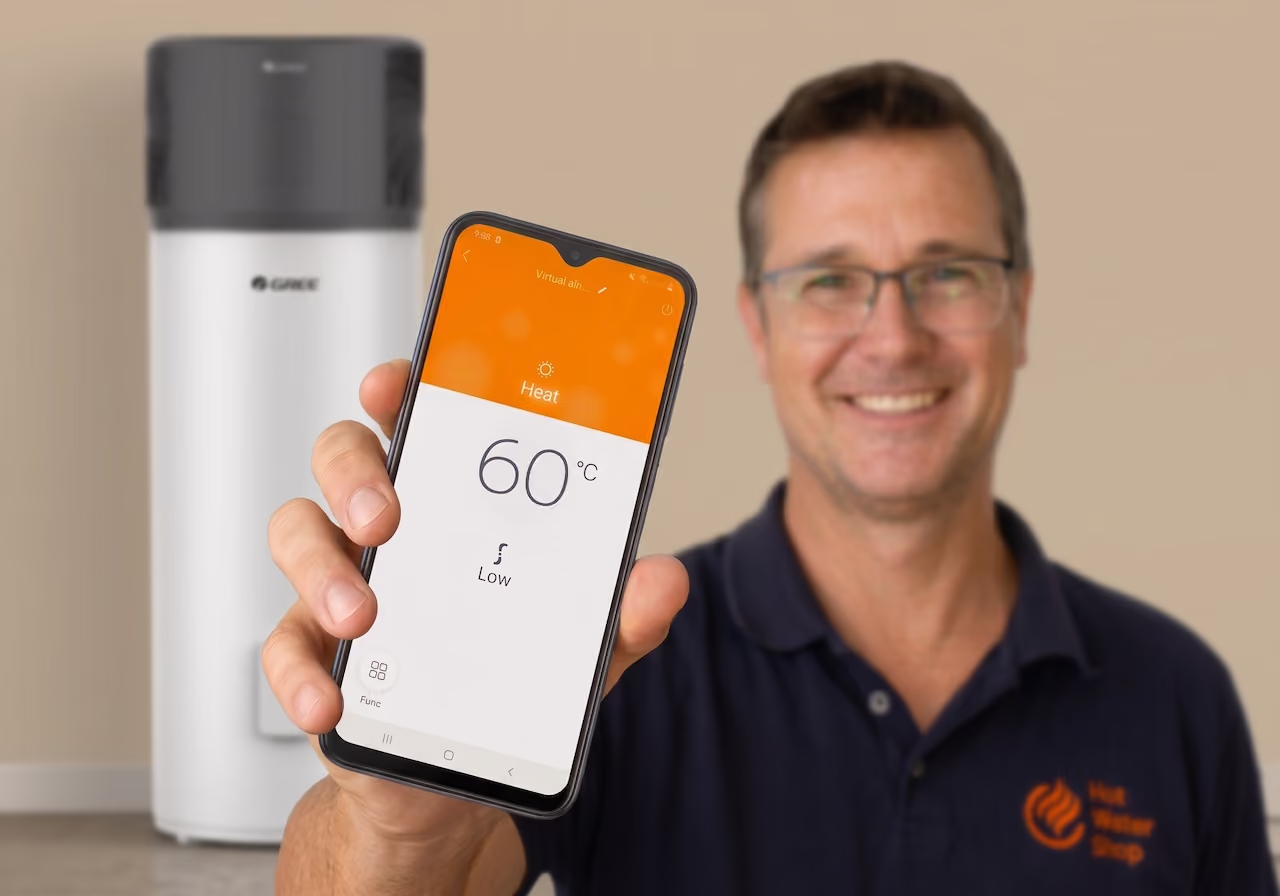
These are standard electric cylinders fitted with smart controllers that learn your household's usage patterns.
Unlike continuous-flow gas systems that burn expensive fuel the second you turn on a tap, a stored electric hot water system allows you to game the electricity market to your advantage.
By utilising Night/Low-user tariffs or connecting your cylinder to a ripple control switch or timer, you can heat your entire tank of water during off-peak hours when electricity prices hit rock bottom. Furthermore, if you plan to install solar panels in the future, your electric cylinder acts as a highly effective "thermal battery"—storing free sunshine in the form of hot water to be used later in the evening without drawing power from the grid.
If you are ready to stop paying the residential gas tax, you need to execute the transition in the correct chronological order to avoid being left without hot water or facing unexpected utility penalties.
1.Get an Electric Hot Water Quote:Step 1.
Have a certifying plumber or electrician quote and install your new electric cylinder or hot water heat pump first. Ensure they leave your old gas califont safely mounted but entirely bypassed from the plumbing system.
2.Hire a Gas Fitter to Safely Cap Internal Lines:Step 2.
A certifying gas fitter must physically disconnect the internal pipework from your old appliances, purge the remaining LPG vapor safely from the lines, and cap them off inside the house to meet New Zealand safety standards.
3.Request Permanent Decommissioning from Your Retailer:Step 3.
Contact your energy provider (Contact, Genesis, Mercury, etc.) and explicitly request a "Permanent closure of the gas ICP and meter removal." Do this immediately after the lines are capped to halt the daily fixed line charges.
The writing is on the wall for reticulated residential gas networks in New Zealand. With fixed line charges rising continuously and network exit fees becoming entirely unpredictable, the cheapest time to cut the cord and convert to a reliable electric hot water option will always be right now.