Get a FREE, No-Obligation quote
We’ll get back to you promptly with specialist advice — and a great price.
* Required

Talk to the specialists

0800 468 928

We’ll get back to you promptly with specialist advice — and a great price.
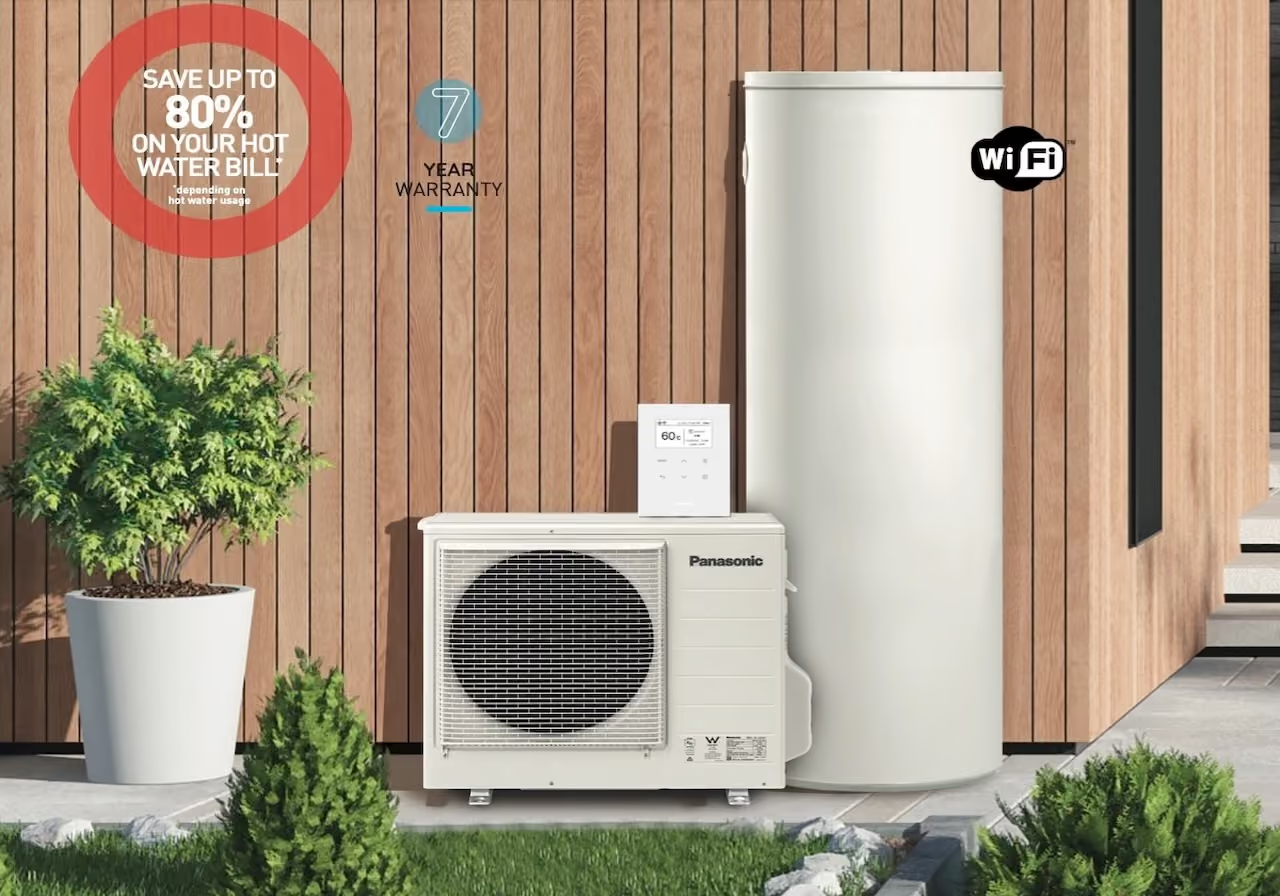
If you’ve been looking at hot water heat pumps online, you’ve probably seen the sticker price for the unit itself-typically sitting anywhere between $3,500 and $6,500+ depending on the brand, tank size, and whether it’s an all-in-one or split system.
What’s harder to find a straight answer on is what the actual installation costs.
Every Christchurch home has a different setup-from older villas in St Albans with low-pressure cylinders tucked in the roof, to modern post-quake builds in Rolleston-and it’s the labour, pipework, and site setup that determine the install price.
While the hot water heat pump unit itself generally costs $3,500 – $6,500+, the installation work alone in Christchurch typically lands between $2400 at the minimum and $4,500 – $5,000 at the top end (incl. materials, valves, plumbing, gas fitting, electrical, and disposal).
Installation Scenario: The Straightforward Swap (Minimum) Estimated Install Cost (Excl. Unit, Excl. GST) $2,400 – $2,800
What This Usually Involves
Replacing an existing outdoor electric cylinder-or an outdoor gas califont that already has a 10A power point and nearby pipework-with an "all-in-one" unit in the exact same spot.
Installation Scenario: The Typical Christchurch Install (Median) Estimated Install Cost (Excl. Unit, Excl. GST) $3,200 – $3,900
What This Usually Involves
Moving an indoor cylinder outside, levelling the ground for a solid concrete paver base, adding tempering/pressure valves, and dedicated electrical connection.
Installation Scenario: The Complex Conversion (Maximum) Estimated Install Cost (Excl. Unit, Excl. GST) $3,800 – $5,000+
What This Usually Involves
Upgrading from low pressure to mains pressure, installing a split system (refrigeration piping), long pipe runs, pulling cupboards apart for access, bringing professional movers for tricky access.
When I walk around a property to price up the install, these are the main things I’m checking that can push the labour and materials bill closer to the $2,400 minimum or up toward the $5,000 mark.
Your current hot water setup dictates how much plumbing, electrical, and gasfitting work is needed-and converting from gas is often much more straightforward than people assume:
If your current cylinder or califont is already outside on mains pressure, we can often tie straight into the existing hot and cold pipework. Installation costs climb when:
Aside from the difference in unit price, the style of system you pick changes how much trade time is involved on the day:
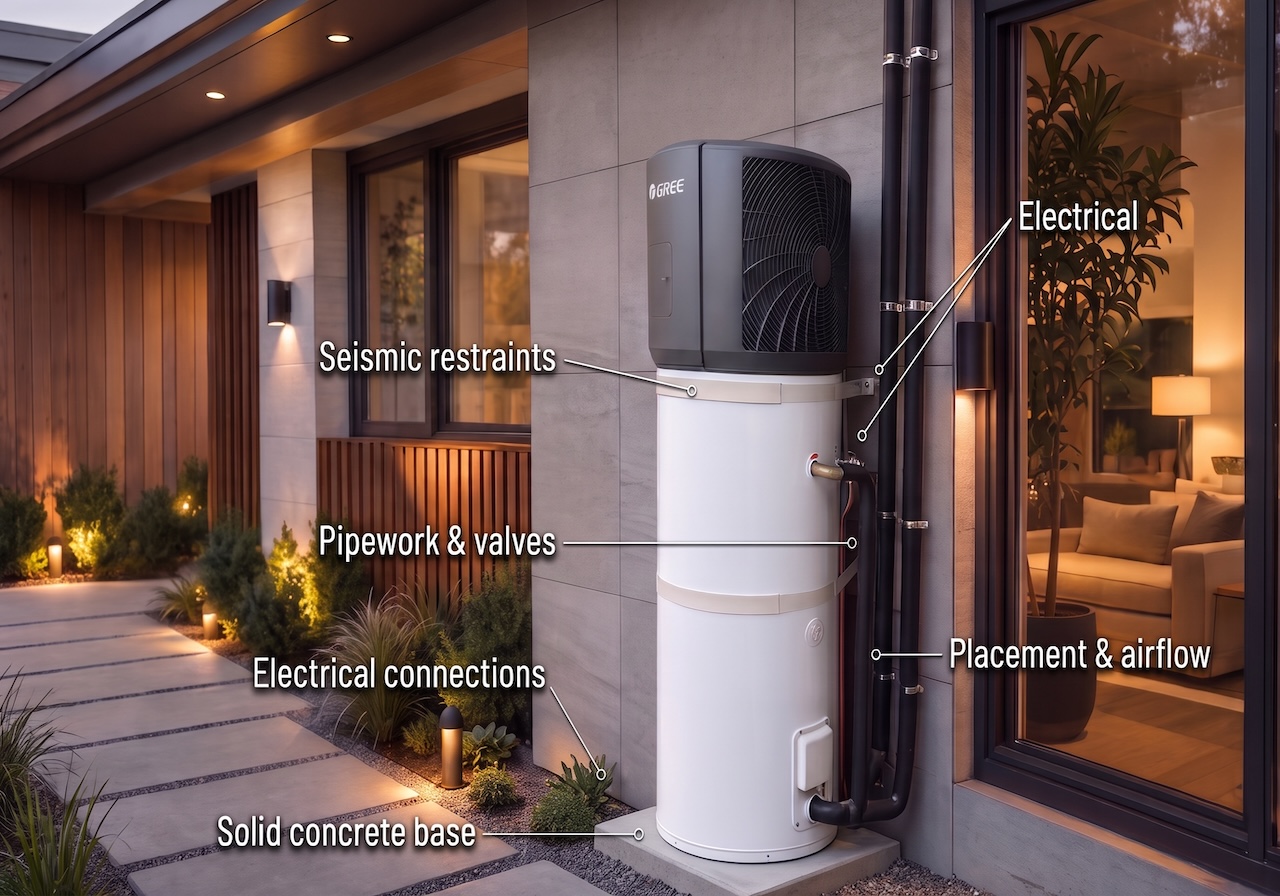
You can’t just tuck a hot water heat pump into any spare corner. When we pick a spot on your section, we have to factor in:
A full 250L–300L+ hot water heat pump weighs roughly 350kg to 465kg once filled with water. Sitting it straight on dirt, grass, or standard thin garden pavers isn't an option-it may sink over time and put stress on the pipework.
Our electricians check how your power is configured at the switchboard. In older Christchurch homes with dated fuse boards-or houses that have already added an EV charger, induction cooktop, and ducted heat pump-the board might need an additional RCD safety switch or minor upgrade to meet current electrical regulations. We also bypass any existing "ripple control" (night-rate power) is wired, as heat pumps run most efficiently when they can heat during warmer daytime hours rather than being locked out until the middle of a freezing winter night.
Getting an old, heavy, calcified cylinder out of a tight roof space or narrow hallway cupboard takes time and muscle. At Hot Water Shop, we include decommissioning, removing, and responsibly recycling/disposing of your old cylinder in our install quotes-whereas some bare-bones quotes leave the old tank sitting on your lawn unless you pay extra. If your old tank is tucked away in an awkward ceiling cavity that requires extra dismantling or tricky two-person access to get out, that labour gets factored in too.
If your existing cylinder has already burst or failed, timing matters. Because we use heavy-duty solid pavers rather than pouring wet concrete that needs days to cure, we can complete our installations in a single day-so you aren't left without hot showers.
Because so many of these installation variables depend on your house's layout, a generic online price can only ever be a rough guide - that is why we insist on completing a free onsite quote specific to your home. The good news is that once a hot water heat pump is in, it uses up to 70%–75% less electricity than a standard electric cylinder-saving a typical Christchurch household a thousand dollars or more every year on power bills.
If you’re thinking about making the switch-or your current cylinder is on its last legs-give me a call on 0800 468 928 or book a free, no-obligation on-site quote. I’ll come out, check your pipework, electrics, and placement options in person, and give you a clear, fixed price for the unit and installation with no surprises on the day.