Water heating accounts for roughly 30% of the average Canterbury household power bill. While traditional electric cylinders burn through money and older low-pressure tanks struggle with flow, hot water heat pumps can slash that energy consumption by up to 70% to 75%.
A heat pump water heater operating in Southshore faces corrosive salt-laden easterlies, while the same unit installed in Rolleston, Darfield, or Rangiora must start every winter morning in sub-zero frost and ice. Meanwhile, inner-city medium-density townhouses require pin-drop acoustics to stay within Christchurch City Council (CCC) boundary limits. It helps to know which unit might suit you best.
Matching Heat Pumps to Canterbury Microclimates
1. The Inland Frost Belt (Rolleston, Lincoln, Darfield, Rangiora, Halswell)
The Challenge: Heavy winter frosts and sustained negative temperatures (often dipping between -3°C and -8°C).
What Happens: Standard units freeze up and trigger automatic defrost cycles. Budget models rely on inefficient electric resistance booster elements, eroding winter savings.
What You Need: Systems with certified low-ambient operation down to at least -7°C or -10°C (such as R290 or CO2 R744 systems), smart evaporator defrost logic, and insulated pipework.
2. The Coastal Salt Zone (Sumner, Redcliffs, New Brighton, Southshore, Lyttelton)
The Challenge: Relentless easterly sea breezes, airborne salt spray, and driven rain off Pegasus Bay.
What Happens: Unprotected aluminium evaporator fins corrode within a few seasons, causing refrigerant leaks and compressor burnout.
What You Need: Factory-applied hydrophobic/anti-corrosive coil protection (e.g., BlueFin, GoldFin, or epoxy coatings), stainless or marine-grade outer hardware, and weather-rated outdoor electronics.
3. High-Density Townhouse Living (Christchurch CBD, Merivale, Riccarton, St Albans, Addington)
The Challenge: Post-quake medium-density housing (MDH) with tiny boundary setbacks, shared courtyards, narrow alleyways, and bedrooms placed right next to external services.
What Happens: Fixed-speed compressors emit a resonant 50 Hz hum that echoes between concrete paths and fences, creating boundary noise.
What You Need: Inverter compressors or split configurations operating around 45 dB(A), and flexible discharge positioning away from neighbour boundaries.
4. Hill Suburbs & Port Hills (Cashmere, Mount Pleasant, Huntsbury, Redcliffs)
The Challenge: High wind exposure, seasonal temperature inversions, cold downward katabatic drainage winds, and tricky site access with vertical pipe runs.
What Happens: Heavy winds interfere with the fan discharge cowl, and steep slopes require split systems where the tank can sit inside the house while the compressor sits on an exterior pad.
What You Need: Split systems (where the heavy tank can sit inside while the compact compressor goes outside) can be best if your property is really exposed to the elements.
Comparison Matrix: My 6 Most Installed Models for 2026
Model
Type
Capacities
Rated COP
Noise Level
Min Ambient Temp
Refrigerant
Best Canterbury Fit
Rinnai HydraHeat
Integrated (All-in-One)
275L, 340L
Up to 4.7
45 dB(A)
-10°C
R290
Best All-Rounder: Coastal (Sumner) to Frost (Rolleston)
Panasonic CO₂ Deluxe
Split System
215L, 275L, 340L
Up to 5.2
37 dB(A)
-10°C
R744 (CO₂)
Best for Plains Frost: Darfield, Lincoln, Inland Canterbury
Gree WHIO Inverter
Integrated (All-in-One)
200L, 270L
5.4
44 dB(A)
-7°C
R290
Best for Townhouses: Merivale, CBD, Riccarton
Rheem AmbiPower 280e
Integrated (All-in-One)
280L
5.2
47 dB(A)
-6°C
R290
Best for Busy Families: Papanui, Burnside, Hornby
Haier Monoblock
Integrated (All-in-One)
200L, 250L, 330L
4.0 – 4.49
43–47 dB(A)
-7°C
R290
Best Budget Retrofit: Shirley, Linwood, Sydenham
Carrier Blue 300L
Integrated (All-in-One)
300L
4.5 – 5.0
48 dB(A)
-7°C
R290
Best High Capacity: Multi-teen homes, lifestyle blocks
Top models and where they fit (plus links to full reviews)
1. Rinnai HydraHeat Integrated: The Proven Canterbury All-Rounder
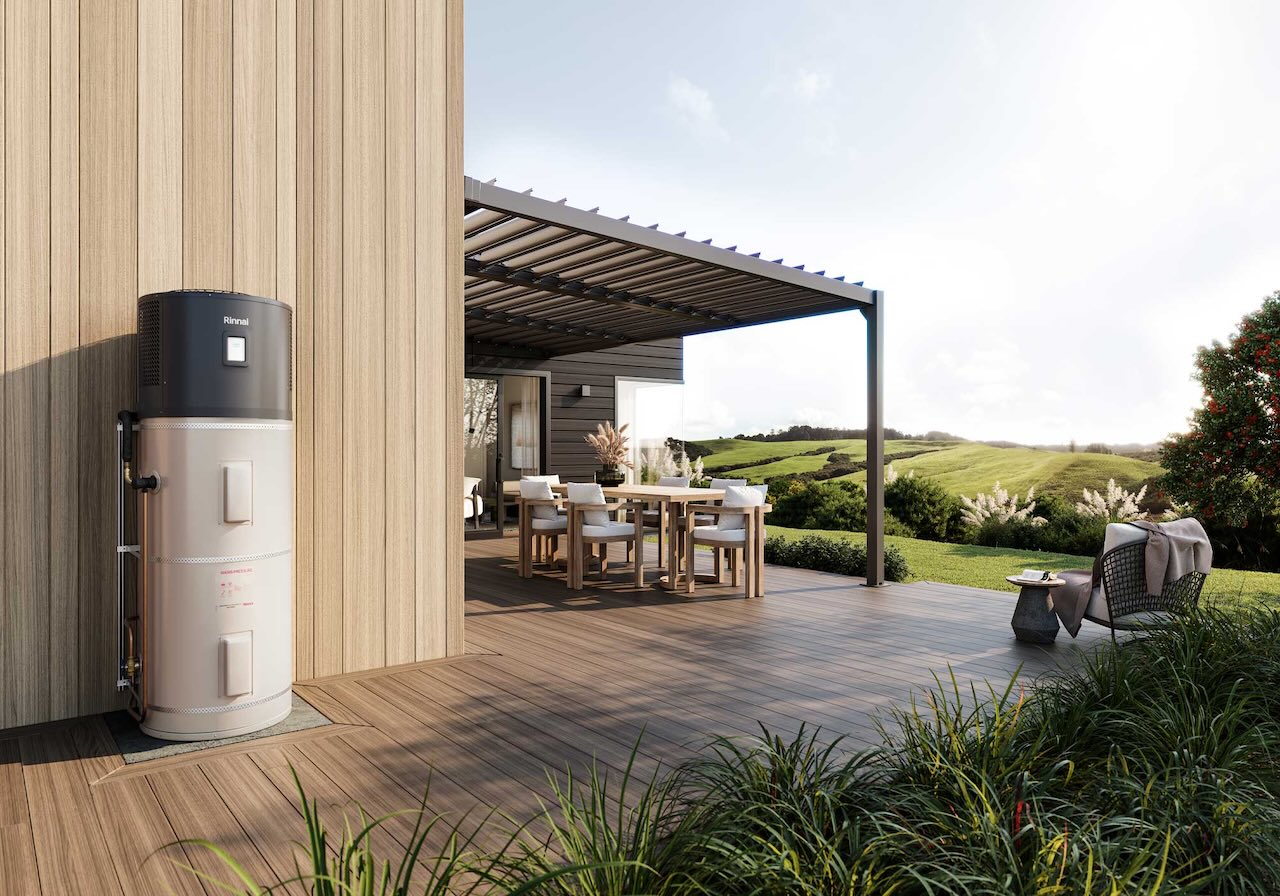
Rinnai engineered the HydraHeat specifically for New Zealand’s temperamental climate. It is an integrated monoblock unit using natural R290 propane refrigerant, paired with anti-corrosion exterior coatings and frost-cycle management.
Canterbury Suitability: Exceptional. Because it is engineered to maintain pure heat pump generation down to -10°C before defaulting to electric elements, it handles biting winter frosts in Rolleston, Rangiora, and West Melton without massive efficiency drops. Simultaneously, its marine-grade coil protection holds up against salt spray blowing into Sumner, Southshore, and Lyttelton.
Acoustics: 45 dB(A). Quiet enough for standard standalone homes, though requires smart placement away from bedroom windows on tight suburban sections.
Pros: Operates down to -10°C; robust coastal corrosion protection; reliable local parts supply across NZ.
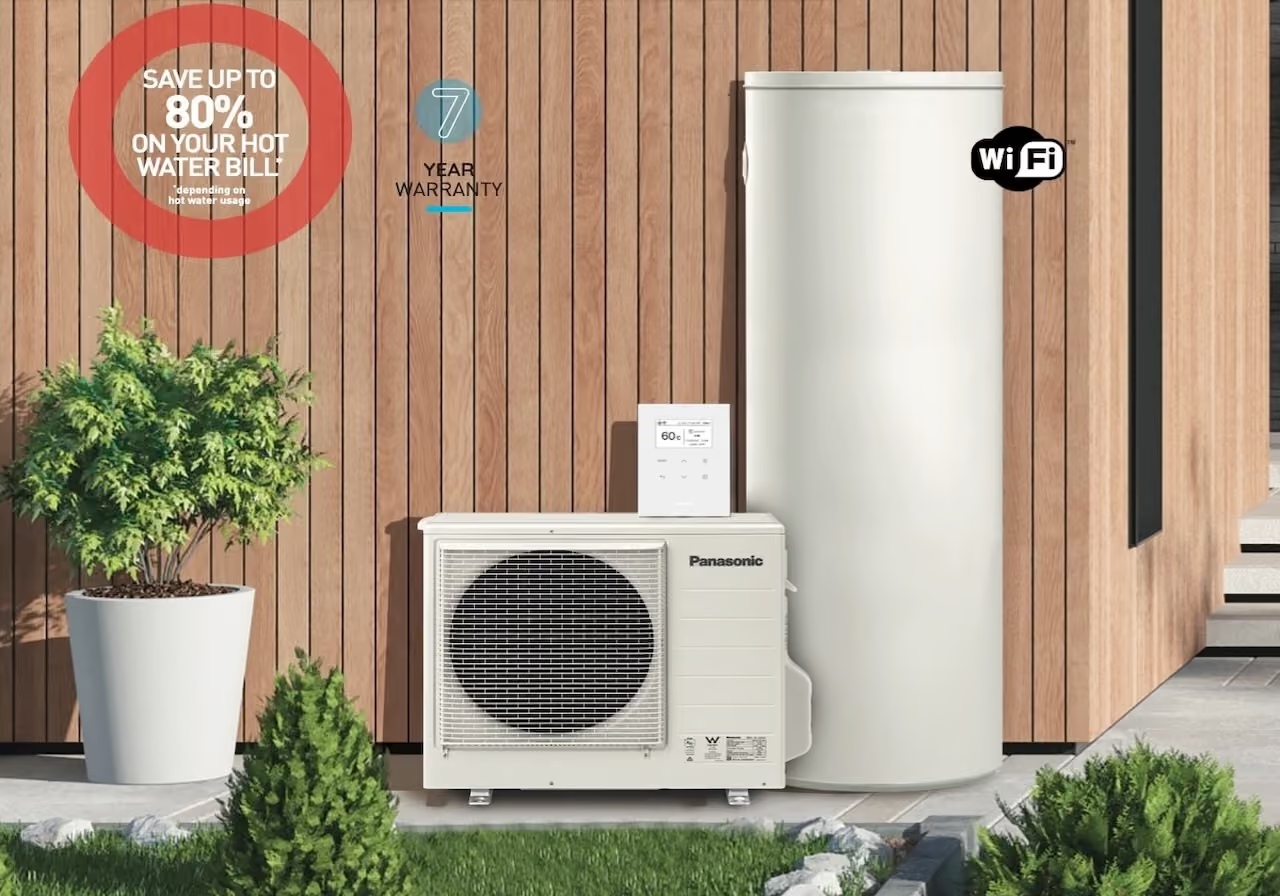
2. Panasonic CO₂ Deluxe: The Freezing Plains & Sub-Zero Specialist
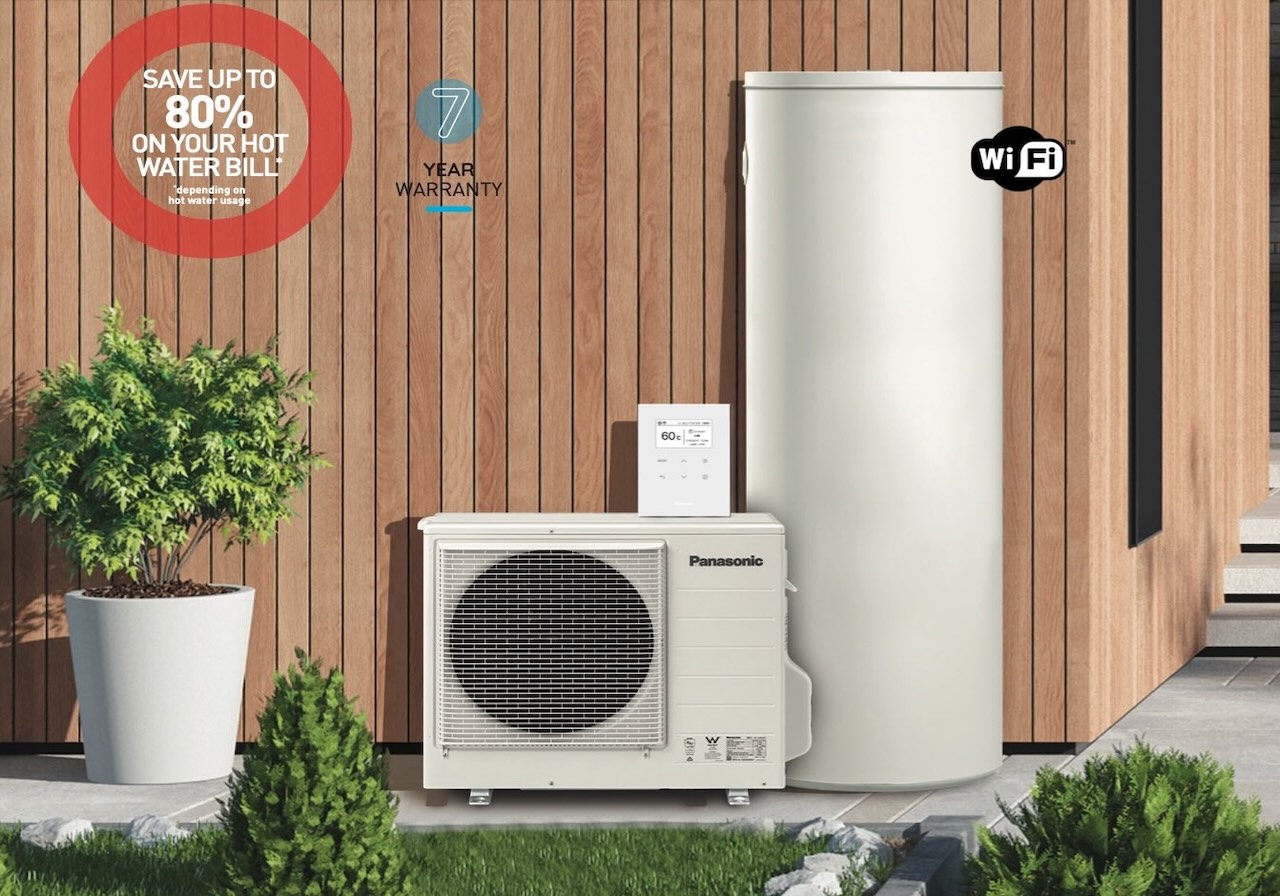
Unlike the monoblock units, the Panasonic Deluxe is a split system. It runs on R744 (natural CO₂ refrigerant) and pairs an ultra-compact outdoor compressor with an indoor or outdoor storage cylinder.
Canterbury Suitability: The undisputed king for the Canterbury Plains (Rangiora, Rolleston, Lincoln) where night frosts frequently sit below -5°C. CO₂ systems naturally excel at extreme cold: thermodynamic heat transfer remains high even at -10°C. Because it is a split unit, the cylinder can remain inside the home’s thermal envelope (like an existing laundry cupboard).
Acoustics:37 dB(A). At library-whisper volume, it is the single best unit for zero neighbour friction in dense urban developments.
Pros: World-class low-temperature efficiency (COP over 5.0); whisper-quiet 37 dB outdoor unit; can retrofit directly into existing indoor hot water cupboards.
3. Gree WHIO Inverter: The Modern Townhouse & Boundary Champion
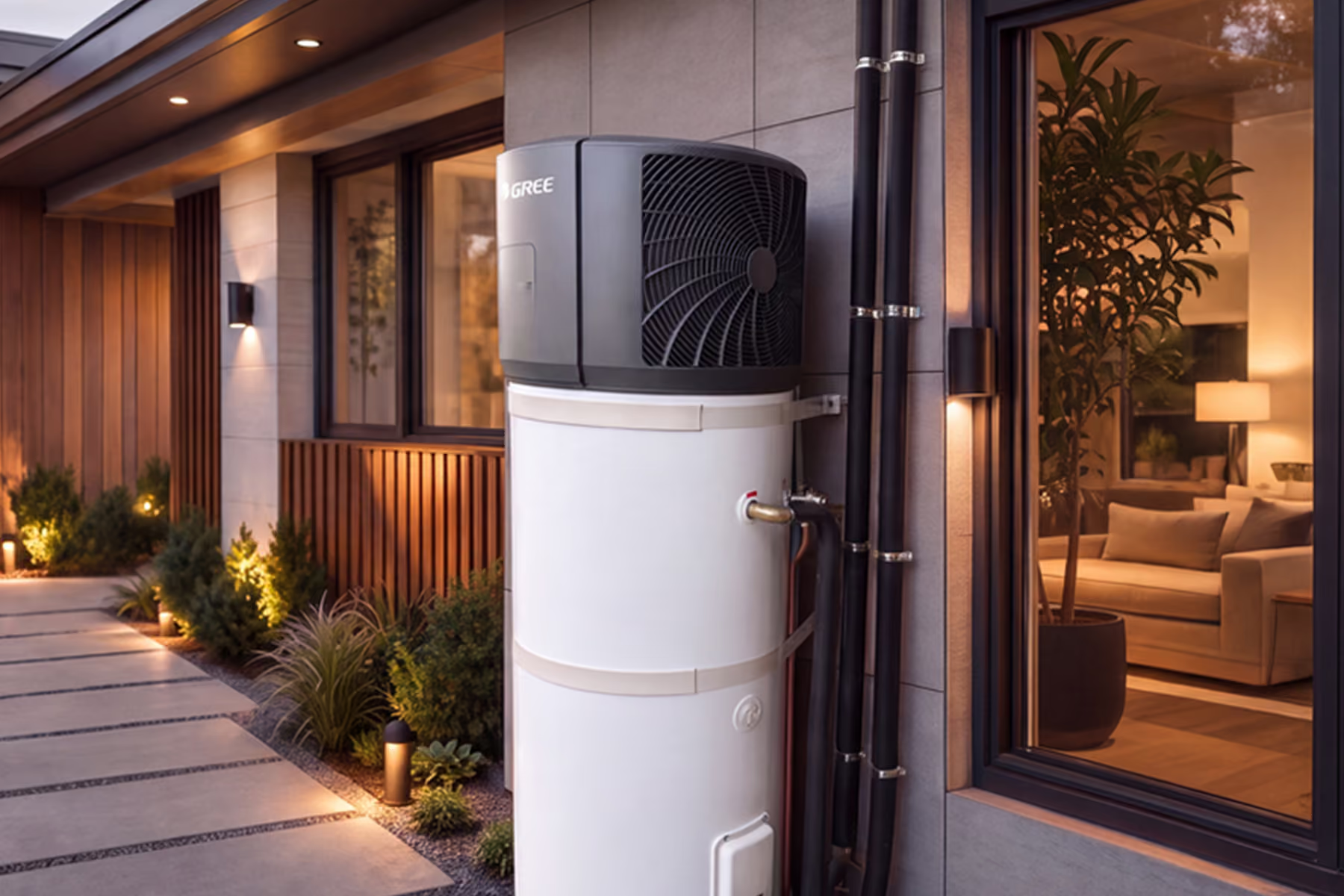
Gree is one of the globe’s premier HVAC manufacturers, and the WHIO series brings true DC Inverter technology to hot water. Rather than cycling on and off at 100% blast, the compressor modulates its speed to match demand.
Canterbury Suitability: Ideal for Christchurch Central, Merivale, St Albans, and Addington where modern post-quake sub-divisions place heat pumps in narrow side-alleys. The inverter eliminates the jarring mechanical "clack and roar" when starting up. It operates comfortably down to -7°C, which covers nearly all metropolitan Christchurch winters.
Acoustics: 44 dB(A). Smooth acoustic profile with very low harmonic vibration, making it safe for close boundary proximity.
Warranty: Leads the industry with a 7-year fully comprehensive parts and labour warranty across the entire unit.
Pros: Class-leading warranty; high COP of 5.4; smooth inverter modulation.
Cons: 270L is the maximum size (may fall short for very large households with back-to-back baths).
4. Rheem AmbiPower 280e: The High-Demand Family Workhorse
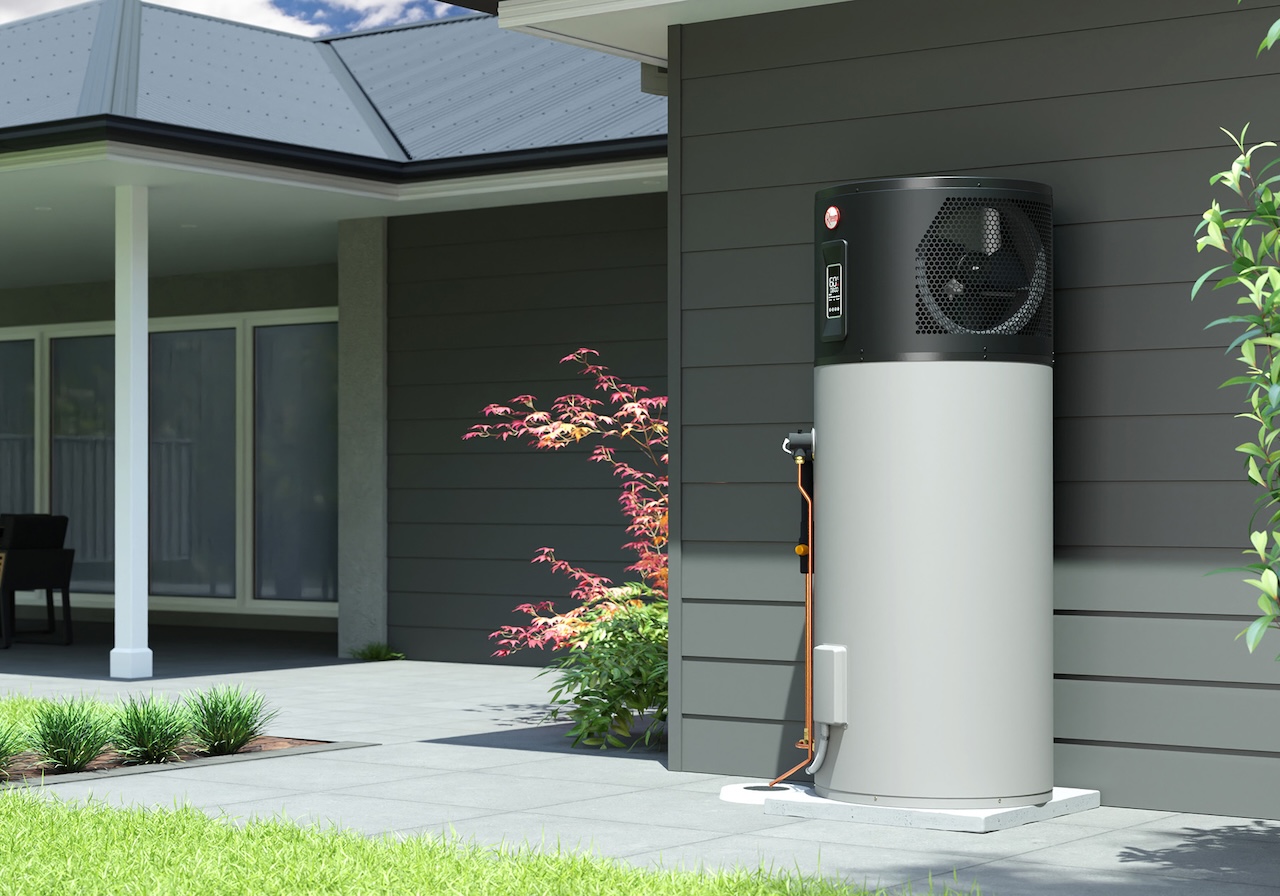
Rheem is an established fixture in New Zealand plumbing. The AmbiPower 280e upgraded the lineup to eco-friendly R290 refrigerant, pairing a high-efficiency wrapped microchannel heat exchanger with a stout 2.4 kW backup electric boost element.
Canterbury Suitability: Outstanding for busy family suburbs like Burnside, Fendalton, Papanui, and Hornby. If you have four to six people showering every morning, heat pumps need fast recovery. While the unit operates down to -6°C in pure heat pump mode, its powerful 2.4 kW element guarantees your household won't run out of hot water during polar southerlies.
Acoustics: 47 dB(A). Noticeable compared to Gree or Panasonic; avoid installing directly against bedroom walls or right on an outdoor boundary fence.
Pros: Excellent hot water recovery speed; robust local plumber familiarity and parts availability across Canterbury; high COP of 5.2.
Cons: Louder compressor output; limited to -6°C ambient cutoff for pure heat pump mode.
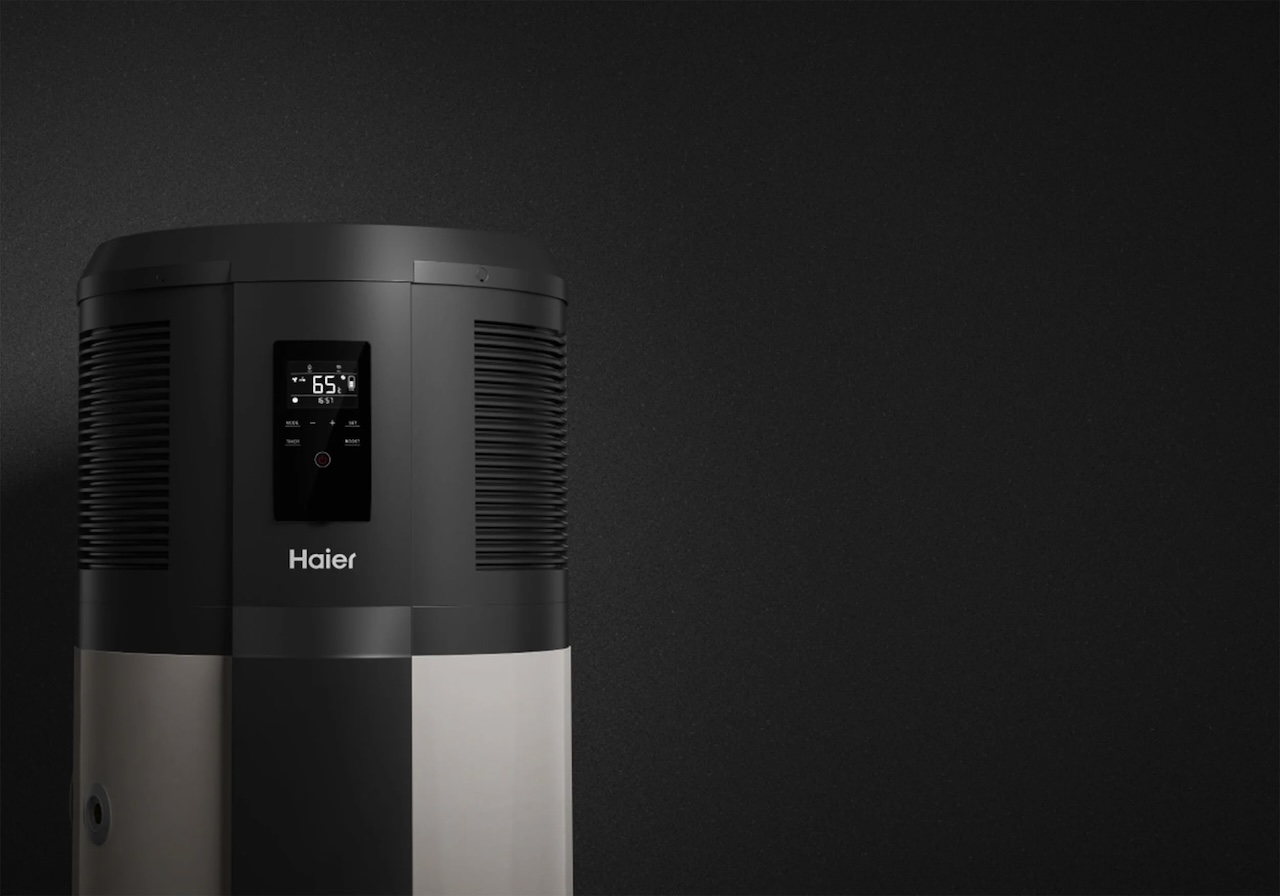
5. Haier Monoblock: The Smart Value-Per-Litre Retrofit
Haier dominates entry-level conversions across New Zealand. Built as an all-in-one monoblock with standard sizes ranging from 200L to 330L, it offers low capital cost and a slender profile.
Canterbury Suitability: Great for rental properties, first-home buyers, or retrofits in Shirley, Linwood, Sydenham, and Spreydon. The 200L and 250L models have a narrow 630 mm diameter footprint, fitting neatly down tight paths where older 1970s bungalows have minimal outdoor access. Operates down to -7°C, sufficient for Christchurch flatlands.
Acoustics: 43 dB(A) on smaller models, up to 47 dB(A) on 330L.
Pros: Lowest upfront supply and install cost per litre; slim diameter fits tight passages; integrated Wi-Fi app tracking.
Cons: Exterior finish is standard powder coating (requires regular fresh-water washing in coastal suburbs like New Brighton to prevent salt pitting).
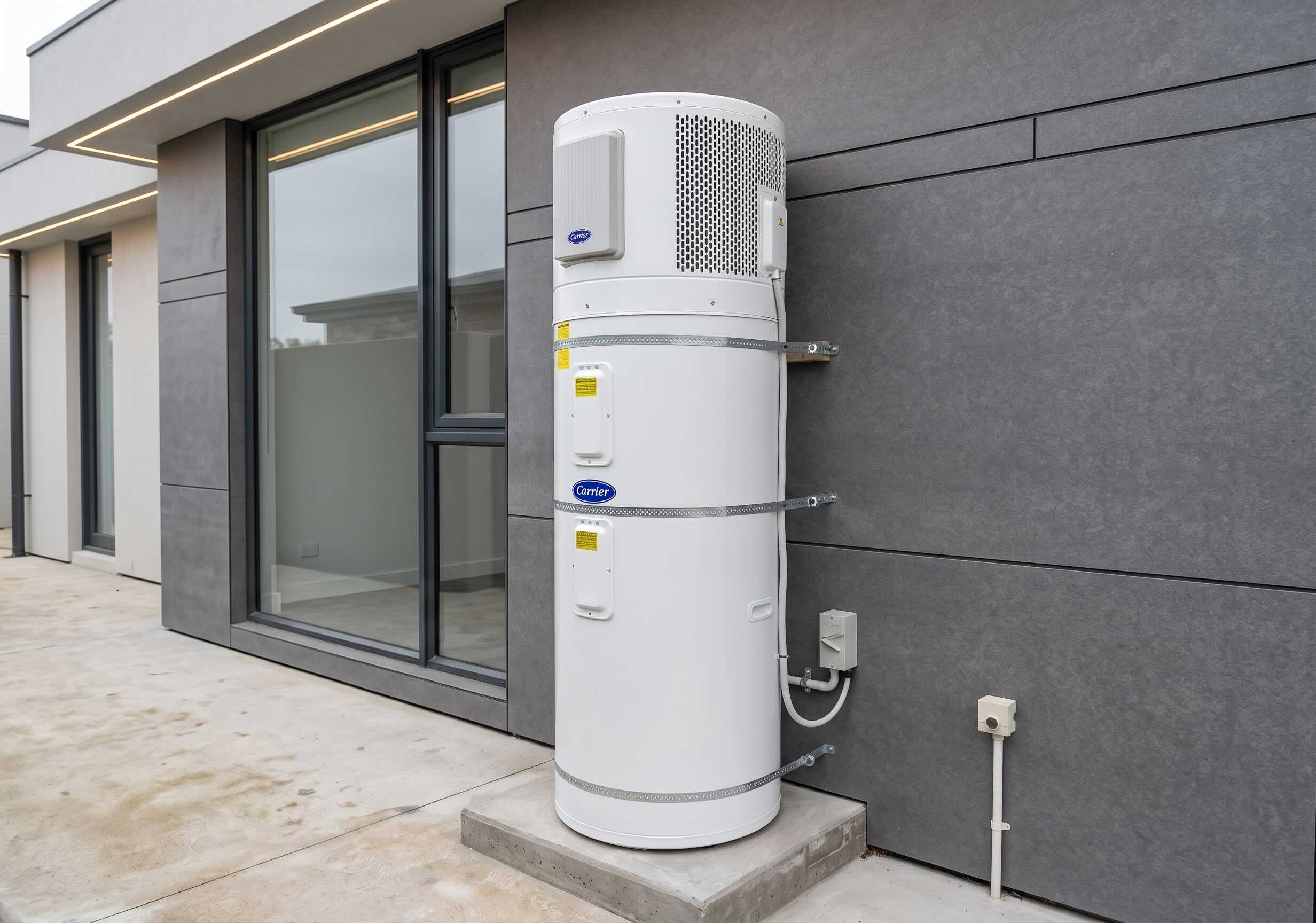
6. Carrier Blue 300L: The Large Lifestyle Block Contender
Carrier is an international commercial HVAC titan, and the Carrier Blue 300L brings industrial durability to residential water heating.
Canterbury Suitability: Tailor-made for large households, rural subdivisions, and lifestyle blocks in Prebbleton, West Melton, Ohoka, and Tai Tapu. When you have multiple bathrooms and continuous evening routines, you need a true 300L storage capacity with high continuous thermal output.
Acoustics: 48 dB(A). Best situated on a concrete slab near the garage, laundry, or utility area rather than a quiet patio.
Pros: Heavy-duty build quality; massive 300L hot water reserve; rapid heating recovery under moderate ambient temperatures.
Cons: Heavier unit that requires wide side access to install; higher sound profile.
When retrofitting or installing a hot water heat pump in Christchurch, it pays to know if any local regulatory hurdles must be addressed:
1. CCC District Plan Noise Rules (Rule 6.1.4)
The Christchurch City Council enforces strict residential boundary noise rules:
Daytime (07:00 – 22:00): Typically limited to 50 dB LAeq at the residential boundary.
Night-time (22:00 – 07:00): Limited to 40–45 dB LAeq and 70–75 dB LAmax at the boundary.
What this means for you: If you install a 47 dB(A) or 48 dB(A) all-in-one unit in a narrow 1.2 m side-yard right on the fence line next to your neighbour’s bedroom, you run the risk of council complaints. For tight townhouse developments in Merivale or the CBD, opt for the Panasonic CO2 (37 dB) or Gree Inverter (44 dB), or place the system on a timer so it reheats during daytime off-peak hours.
2. Building Consent Exemptions (Schedule 1)
Under NZ Building Code Schedule 1, replacing an existing hot water cylinder with a heat pump cylinder is usually exempt from a full building consent, provided.
It is installed by a registered certifying plumber/drainlayer.
It does not breach structural or boundary fire-rating walls.
Seismic restraints meet NZS 4603 / NZS 4219 standards (vital in post-quake Canterbury). Make sure your plumber installs rated seismic brackets to secure the tank to concrete or structural framing.
Canterbury Hot Water Heat Pump FAQ
Do heat pumps really work when Christchurch freezes over?
Yes, modern R290 and CO₂ heat pumps absorb ambient energy down to -7°C or -10°C. Even though air feels freezing to humans, ambient air above absolute zero (-273°C) still holds heat energy. Units like the Rinnai HydraHeat and Panasonic CO₂ run dedicated defrost cycles to keep evaporator coils free of ice. When conditions drop lower, emergency electric backup elements kick in automatically to guarantee hot water.
Will salt air in Sumner or New Brighton ruin the unit?
It will ruin an unprotected budget unit. If you live within 2 km of the coast, insist on systems with hydrophobic coated coils (such as Rinnai’s anti-corrosion protection or BlueFin technology). A practical tip for coastal owners: hose down the exterior cabinet and coils with fresh water once every 3–4 months to clear away accumulated salt encrustation.
How much will a heat pump hot water system actually save me in Christchurch?
Compared to a traditional standard electric resistance cylinder running at a COP of 1.0, a heat pump with an average Canterbury seasonal COP of 3.8 to 4.5 uses 70–75% less electricity to produce the same volume of hot water. For a standard 4-person family paying $0.32/kWh, this translates to roughly $650 to $900 a year in power bill savings.
What size cylinder do I need for my family?
Heat pumps heat water more steadily and gradually than a high-powered electric immersion element. It is recommended to size up slightly compared to an old electric cylinder:
1–2 People: 180L
3–4 People: 180L – 280L
5+ People / High Demand: 280L – 340L
Can I run my hot water heat pump off rooftop solar?
Yes. Systems like the Haier, Rinnai HydraHeat, and Panasonic CO₂ feature dedicated solar PV integration profiles or built-in timers. You can program the heat pump to heat between 10:00 AM and 3:00 PM, soaking up excess midday solar generation and turning your hot water cylinder into a thermal battery for zero running cost.